Blog
November 23, 2026
·6 min readWhy Your Ecommerce Ads Get Clicks but Not Sales

Otuokon Nsikak
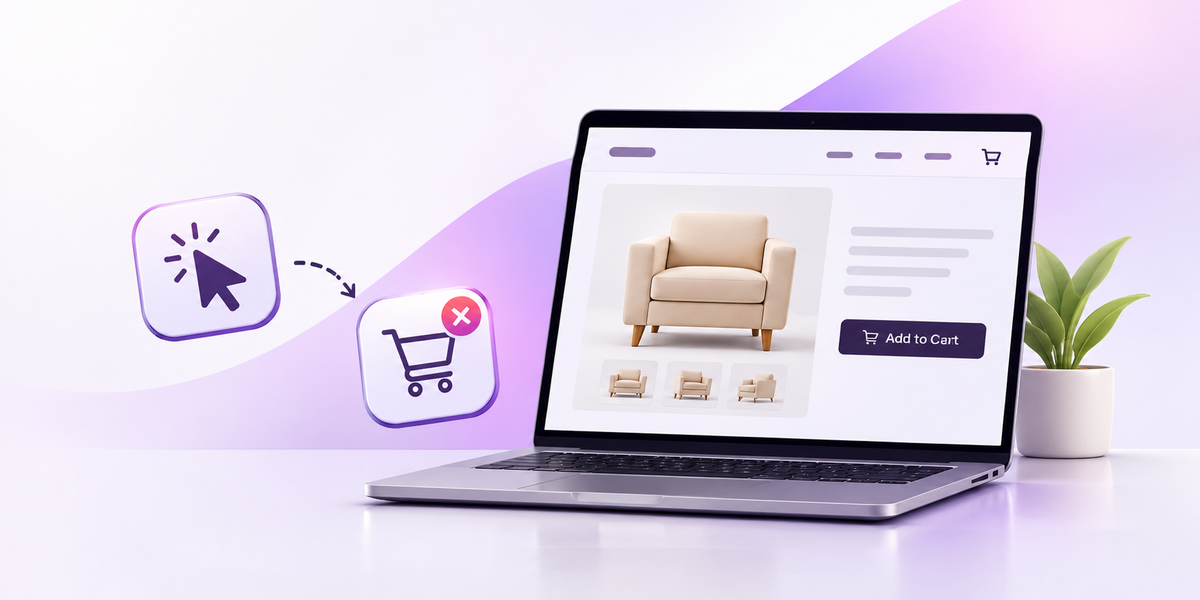
A click proves the ad worked. The sale is decided after the click. When ecommerce ads get clicks but not sales, the most common causes are message mismatch between ad and page, a weak or uncertain product experience, slow mobile load times, the wrong audience or optimisation goal, and broken tracking. Fix the post-click experience before you keep spending on more traffic.
The gap between clicks and sales
Click-through rate measures attention. Conversion rate measures commitment. These are different jobs.
A high CTR with a low conversion rate is a diagnostic signal, not a success metric. It means people found the ad interesting enough to click, then something after the click stopped them from buying. Common benchmarks put Meta ecommerce conversion rates (purchases from clicks) in the 1–1.5% range for many brands, while organic or email traffic often converts higher because it arrives with more context. Paid social traffic is colder by nature. The page has to do more work.
Most of the time, the leak sits between the click and the order confirmation. The ad did its job. The product page, offer, or experience did not.
The main reasons ads get clicks but not sales
1. Message mismatch
The ad promises a specific product, price, offer, or outcome. The landing page delivers something else: a homepage, a generic category, a different variant, or a page that does not immediately confirm the promise. Trust breaks in the first few seconds. High CTR plus high bounce or low add-to-cart is the classic pattern.
2. Uncertainty on the product page
Especially for products with options, size, materials, or visual complexity (furniture, fashion, modular goods, custom items), static photos leave questions unanswered. Shoppers click because the ad looked good, then hesitate when they cannot see exactly what they will receive or how it fits their space. Uncertainty kills conversion more often than price alone.
3. Mobile speed and friction
Most paid social traffic arrives on mobile. Pages that take more than a few seconds to load, or that feel heavy, lose people before they even see the product. Unexpected shipping costs, forced account creation, or a long checkout path compound the problem. The click was paid for; the experience was not ready for it.
4. Audience and optimisation mismatch
Campaigns optimised for clicks or traffic pull in curious people rather than buyers. Broad or poorly qualified creative attracts low-intent traffic. The algorithm does exactly what it is asked to do. When the goal is purchases, the creative and audience signals need to pre-qualify for buyers, not just clickers.
5. Tracking that hides the real picture
Sometimes sales are happening and the ad platform is not seeing them. Attribution windows, missing pixels, consent changes, or checkout extensibility issues can make a working campaign look broken. Always compare ad platform conversions against actual orders in the store before diagnosing the page.
How better product experiences close the gap
Once the technical checks are done, the highest-leverage fix for many catalogs is reducing uncertainty on the product page.
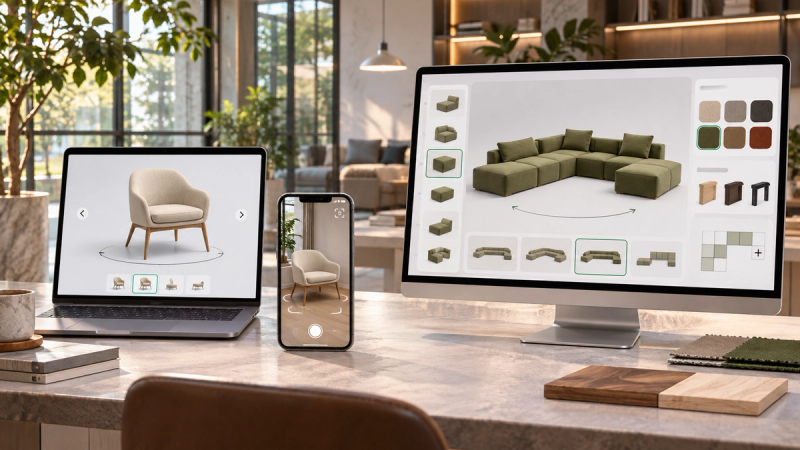
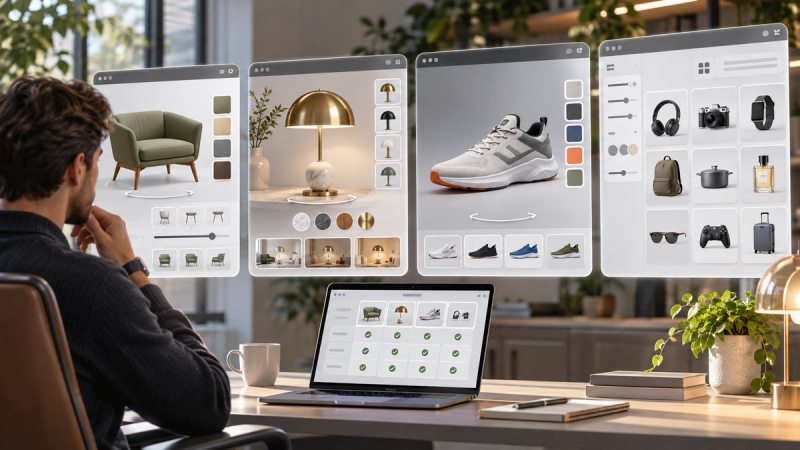
Interactive 3D, VR and AR give shoppers the visual answers static images cannot. They can rotate the product, change colours or materials, see scale, and place it in their space. Case studies in furniture and configurable goods have reported meaningful conversion and average-order-value lifts when 3D viewers or configurators were added (for example, EQ3 with Cylindo and POM with a 3D configurator). These are vendor-published before-and-after results, not controlled tests, so they show what is possible rather than what every store will achieve. They still point to the same mechanism: clearer product understanding raises the odds that a click turns into a purchase.
A simple 3D viewer helps when the product is relatively fixed. A configurator helps more when options matter, and shoppers need to build their version before they feel confident. Either way, the page now delivers on the promise the ad made.
Practical diagnosis order
Work through these before changing creative or increasing budget:
Confirm tracking. Compare store orders to ad platform conversions for the same days.
Check message match. Does the page immediately show the product and offer from the ad?
Measure mobile speed and drop-off between landing page view, product view, add-to-cart, and purchase.
Review audience and optimisation goal. Are you buying clicks or buyers?
Test the product experience. For high-consideration or high-variant products, add clearer visuals (3D, AR, or a configurator) and measure the lift on comparable traffic.
Frequently asked questions
Why do my ads get clicks but no sales?
The ad created interest. Something after the click stopped the sale. The most frequent causes are message mismatch, an uncertain product page, mobile friction, low-intent traffic, or tracking gaps.
Is a high click-through rate with low conversion rate normal?
It is common, especially on paid social, but it is not ideal. It signals that the post-click experience is not converting the interest the ad generated.
Should I fix the ads or the page first?
If CTR is healthy, start with the page and tracking. The ad already proved it can earn clicks. The sale depends on what happens next.
Do 3D and AR actually help ad traffic convert?
They help most when the product has visual or configuration uncertainty. Shoppers who interact with clearer product experiences tend to show higher engagement and, in published case studies, higher conversion and order value. Test on your own traffic.
How do I know if the problem is the audience?
Look at engagement after the click. If people bounce immediately or never view the product, the traffic may be too broad. If they engage but do not add to cart, the page or offer is more likely the issue.
Next step
Start with one product that already gets ad clicks but converts poorly. Make the page match the ad, remove friction, and add the level of product clarity the shopper needs (static images, 3D viewer, or configurator). Measure conversion, add-to-cart rate, and average order value against the previous period or a holdout.
The clicks are already paid for. The job now is to turn more of them into sales.
Book a SwiftXR demo or Start free with SwiftXR to see how interactive 3D, VR and AR can sit on the product page your ads already drive traffic to.