Blog
September 29, 2026
·9 min readBest 3D Product Modeling Software for Ecommerce in 2026

Otuokon Nsikak
If you sell online, a 3D model is only useful when it helps a shopper decide.
That is the filter most software comparisons miss.
Some tools are built for film-quality detail.
Some are built for CAD precision.
Some are built for fast concepting.
Only some of that output is ready for a product page.
This guide breaks down the best 3D product modeling software options for ecommerce teams, what each category is good at, and how to move from a finished model to a live interactive experience.
One distinction matters from the start:
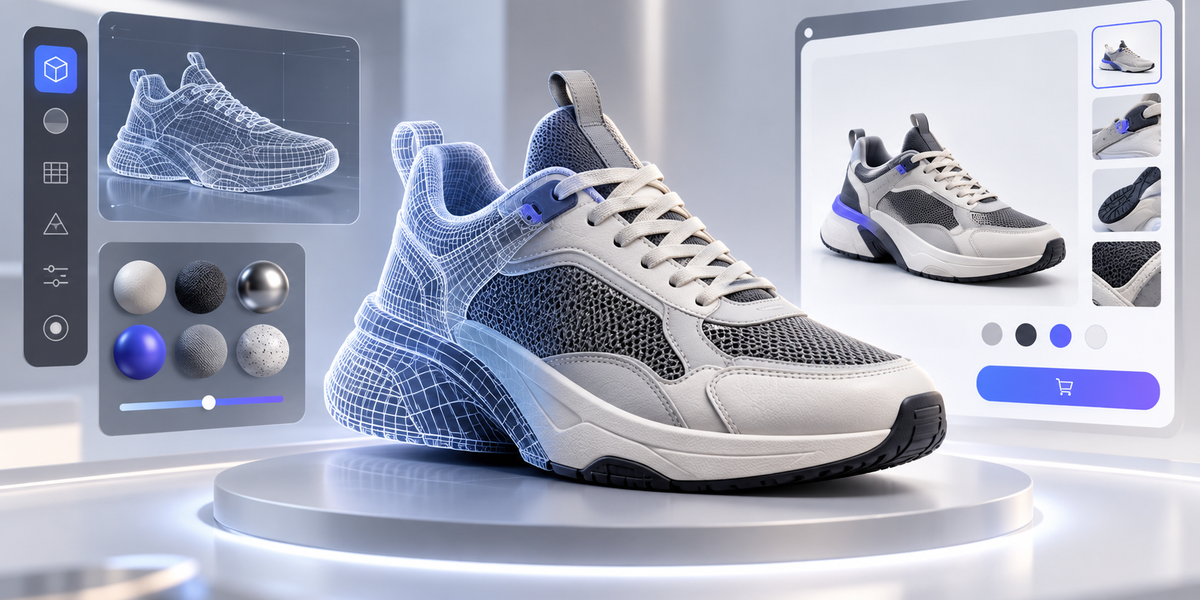
Modeling software creates the asset.
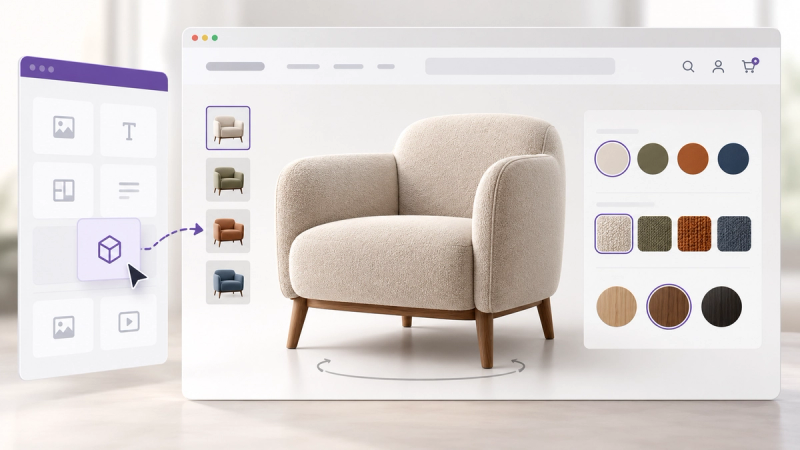
A publishing platform like SwiftXR turns that asset into a product experience shoppers can open, configure, and view in AR.
What ecommerce actually needs from 3D modeling software
Ecommerce is not the same as game production or industrial design review.
A strong ecommerce model usually needs to be:
- accurate enough to represent the real product
- clean enough for browser performance
- structured for materials, variants or configuration
- exportable in a web-friendly format such as GLB
- stable on mobile product pages
If the software can sculpt anything, but the export is heavy, messy or hard to reuse, it is not the best ecommerce choice.
Product modeling vs product visualisation
These terms get mixed together.
Product modeling
Building the 3D geometry and materials of the product.
Product visualisation
Presenting that product so a customer can understand it. That may include renders, interactive 3D, configuration or AR.
A brand can be strong at modeling and still weak at visualisation if the model never becomes a usable product-page experience.
That is why the workflow matters as much as the tool.
The main categories of 3D product modeling software
1. Professional desktop modeling tools
Examples: Blender, Autodesk Maya, 3ds Max, Cinema 4D
Best for: high control, detailed products, teams with 3D talent
Strengths
- deep modeling control
- strong material and UV workflows
- suitable for complex catalogue work
- widely supported export options
Limits for ecommerce
- steeper learning curve
- slower for non-specialist teams
- still needs a separate publishing step for product pages
Best use case
Brands with internal 3D artists or agency support who need consistent, high-quality product assets.
2. CAD-based and design-engineering tools
Examples: SolidWorks, Rhino, Fusion-style CAD workflows, other engineering-led tools
Best for: products that already exist as manufacturing or design files
Strengths
- dimensional accuracy
- strong for industrial, furniture, hardware and engineered goods
- useful when the source of truth is already CAD
Limits for ecommerce
- CAD files are often too heavy for the web
- materials and retail presentation usually need extra work
- export and cleanup are required before ecommerce use
Best use case
Manufacturers and product companies converting existing design files into customer-facing 3D.
3. Browser-based and lighter 3D tools
Examples: Spline, Vectary and similar browser-first tools
Best for: faster concepting, lighter product scenes, teams without a full desktop pipeline
Strengths
- easier onboarding
- useful for quick product scenes
- lower barrier for marketing and ecommerce teams
Limits for ecommerce
- may be less ideal for complex manufacturing-accurate assets
- still not the same thing as product-page publishing and merchandising logic
- output quality depends heavily on the use case
Best use case
Teams that need speed and accessible creation more than deep engineering control.
4. AI-assisted and scan-based creation workflows
Examples: image-to-3D tools, photogrammetry apps, scan-to-model workflows such as Luma-style capture pipelines
Best for: starting from photos or real objects when a full manual model would take too long
Strengths
- faster entry point
- useful for early catalogue coverage
- practical for selected product types
Limits for ecommerce
- quality varies by product category
- hidden sides, reflective materials and soft goods can fail
- cleanup and review are still required before publishing
Best use case
Teams that want to move faster on suitable products, then refine and publish the best outputs.
Comparison framework: how to choose
Do not choose software by feature count alone.
Use these questions:
Who will create the models, specialists or generalists?
Do you already have CAD files, photos, or nothing?
How important is manufacturing accuracy versus visual persuasion?
Will the models need configurable materials or variants?
Can the tool export clean web-ready files?
How quickly do you need coverage across a catalogue?
What happens after the model is finished?
That last question is the one ecommerce teams forget.
A model that only lives in the creation tool is not an ecommerce asset yet.
What “web-ready” means for ecommerce
Before a model belongs on a product page, check:
- file format, ideally GLB for many web workflows
- file size that can load on mobile without friction
- clean orientation and scale
- readable materials
- no unnecessary geometry
- stable performance in a browser viewer
- support for the variants you plan to sell
A common working target is to keep many product models lean enough for phones. Exact thresholds depend on the product and page, but mobile performance should be tested before rollout.
Desktop vs browser-based modeling
Desktop wins when
- the product is complex
- the team already knows the software
- long-term asset quality matters more than speed
Browser-based wins when
- the team needs a faster start
- the product scene is simpler
- marketing or ecommerce operators need to participate
Neither one automatically solves publishing.
Whether the model is made in Blender or a browser tool, the commercial step is the same: get it onto the product page in a form customers can use.
Where AI changes the workflow
AI can help with:
- generating a first-pass model from images
- speeding up early catalogue experiments
- reducing blank-canvas time for simple products
AI does not remove the need for:
- product accuracy checks
- material review
- scale verification
- mobile performance testing
- final publishing decisions
Treat AI as an accelerator inside the pipeline, not as a replacement for catalogue standards.
Recommended software direction by business type
DTC brand with a small team
Use an accessible modeling or scan-assisted workflow for priority products, then publish quickly. Do not wait for a perfect studio pipeline before testing interactive product pages.
Manufacturer with existing CAD
Start from CAD, clean and condition the assets for web, then publish interactive product experiences for buyers and sales teams.
Furniture or home brand
Prioritise accurate scale, materials and AR readiness. Modeling quality matters, but spatial confidence matters just as much.
Fashion or configurable lifestyle brand
Model with variants in mind. If customers choose materials or finishes, structure assets for configuration rather than one-off renders.
Enterprise catalogue team
Standardise naming, export rules, file-weight targets and review checkpoints. Software choice matters less than a repeatable handoff process.
The missing layer: publishing
This is where many “best software” articles stop too early.
After the model is created, ecommerce teams still need to:
- upload and present it
- let shoppers rotate and inspect it
- support configuration where required
- enable AR where useful
- embed the experience on Shopify, WooCommerce, Wix or a custom site
- measure whether people actually use it
That is the role of SwiftXR.
SwiftXR is not a replacement for Blender, CAD software or your modeling vendor. It is the layer that turns a finished model into an interactive product experience customers can open in the browser, explore in 3D and view in AR without an app download.
That distinction keeps the stack honest:
- Modeling software builds the product asset
- SwiftXR publishes the product experience
A practical ecommerce workflow
Choose the modeling path that matches your source assets and team skill
Build or generate the product model
Clean scale, materials and file weight
Export in a web-friendly format
Upload to SwiftXR
Configure the viewer, optional variants and AR
Publish to the product page
Measure interaction and conversion support
If your process ends at step 3, you have digital files.
If it reaches step 7, you have a commercial product experience.
What to prioritise in 2026
The brands moving faster are not always the ones with the most expensive modeling stack.
They are the ones who:
- choose tools their team can actually operate
- create models for the products that cause hesitation
- prepare assets for mobile web conditions
- publish interactive experiences instead of stopping at renders
- expand catalogue coverage after the first products prove useful
The best software is the one that helps you complete that chain.
FAQ
What is the best 3D product modeling software for ecommerce?
It depends on your team and source assets. Desktop tools are strongest for controlled high-quality production. CAD workflows are strongest when manufacturing files already exist. Browser and AI-assisted tools are strongest when speed and accessibility matter most.
Is Blender good enough for ecommerce product models?
Yes, for many teams. Blender can produce excellent ecommerce assets when the export is cleaned and prepared for web use.
Can I use CAD files for ecommerce 3D?
Yes, but they usually need cleanup. CAD accuracy is useful. CAD weight and presentation often are not website-ready without conditioning.
Is AI 3D modeling ready to replace product artists?
Not broadly. It can accelerate first drafts and selected product categories, but review, cleanup and publishing standards still matter.
What file format is best for ecommerce product pages?
GLB is a strong default for many web and AR workflows because it packages the model efficiently for browsers.
Does modeling software put the product on my website?
Usually no. Modeling creates the asset. You still need a viewer or publishing platform to present it on the product page.
Where does SwiftXR fit?
SwiftXR is the publishing and product-experience layer. After the model is ready, SwiftXR helps you present it as interactive 3D, optional configuration and AR on your ecommerce site.
Bottom line
The best 3D product modeling software for ecommerce is the one that helps your team create clean, reusable product assets at the quality your catalogue needs.
But modeling is only half the job.
If customers cannot open the product, inspect it and feel confident enough to buy, the software stack is incomplete.
Create the model in the tool that fits your team.
Publish the experience where the purchase decision happens.